5x7 Pink and Silver Floral Overlays: A Process-Oriented Digital Asset
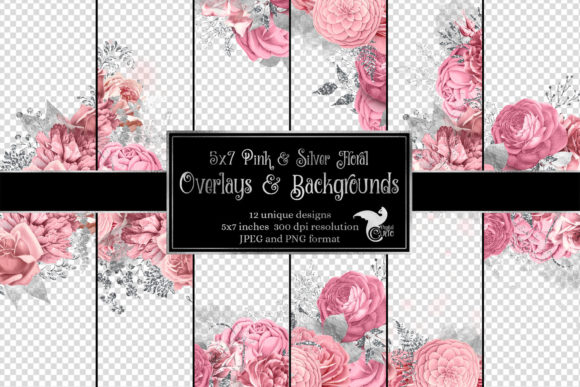
In the practical world of digital design, efficiency is often born from specificity. The 5x7 Pink and Silver Floral Overlays is not just a collection of pretty images; it is a purpose-built digital product engineered to streamline a particular phase of the creative workflow. This set of 12 overlays provides a foundation for projects requiring a 5x7 output dimension, specifically invitations and printable journal pages. The core offering—PNG files with transparent backgrounds—allows you to integrate these vintage floral designs directly onto your chosen base. The included JPEG versions on opaque black and white backgrounds offer alternative starting points, creating a versatile toolkit that fits into different stages of your process.
Strategic Positioning in the Creative Workflow
Understanding where this asset fits is crucial for effective integration. Most creative projects follow a sequence: conceptualization, asset selection or creation, composition, and final output. The 5x7 Pink and Silver Floral Overlays resides squarely in the asset selection and composition phases. For someone designing a batch of wedding invitations or crafting a series of journal templates, searching for or creating individual floral elements can consume significant time. This set acts as a pre-curated resource, eliminating that search and creation step. It arrives ready for the composition stage, where you layer text, photos, or other embellishments onto or alongside it.
The technical specifications speak directly to workflow efficiency. The size of 5.25 x 7.25 inches at 300 dpi is a deliberate choice. The final 5x7 output size is a standard for many physical prints, while the extra .25 inches of space around the edges provides the necessary bleed area. This means that during your layout process in software like Adobe Photoshop, Canva, or Affinity Designer, you can work with the full overlay knowing that the critical floral design is safely within the 5x7 boundary, and the edges can be trimmed or used for alignment without losing the core visual. This pre-embedded bleed prevents a common layout error and saves a step in the prepress or final preparation phase.
Integration with Tools and Platforms
The success of any digital asset hinges on its compatibility. The 5x7 Pink and Silver Floral Overlays are provided in PNG and JPEG formats, the two most universally accepted file types across design platforms. The PNGs with transparency are ideal for sophisticated design software where you want the flowers to float over a custom background—perhaps a textured paper scan or a soft gradient you’ve created. You simply place the PNG file as a layer above your background layer. The JPEGs on white or black backgrounds serve a different function. They can be used as the entire base layer in simpler tools, or when you need a solid, opaque starting point. For example, using the white-background JPEG directly in a word processor or basic online invitation maker might be faster, allowing you to just add text over it.
Consider a common process: designing a printable gratitude journal page. You might start in a layout program, create a 5x7 canvas, and place a pink and silver floral overlay PNG as the top decorative layer. Underneath it, you add a text layer for prompts (“Today I appreciated…”). The transparent background of the overlay lets your underlying canvas color (perhaps a soft cream) show through, creating a cohesive look. Alternatively, if you are batch-producing digital invitations for an event, you could use the black-background JPEG versions to create a dramatic, high-contrast base, then efficiently add white text for each guest’s name and event details using a template action or macro, ensuring consistency across all outputs.
Practical Implementation and Organization
To integrate this set smoothly into your routine, a little preparation pays dividends. Upon downloading, immediately organize the files. Group the PNGs, white JPEGs, and black JPEGs into separate folders within your project directory or your general digital asset library. Naming them clearly (e.g., “Floral_Overlay_01_PNG”) will help you locate them months later when you need a similar aesthetic for a new project. This organizational step aligns with long-term usability, turning a one-time purchase into a recurring resource in your toolkit.
The set’s value is amplified when you think in terms of templates and systems. Instead of using one overlay for one single invitation, consider creating a reusable template file. In your design software, set up a master 5.25x7.25 document with one of the overlays placed and locked. Then, each time you need a new invitation, duplicate that master file, change only the text and perhaps the photo, and export. This method enforces quality control and visual consistency across all materials for an event. It also drastically improves efficiency, turning a creative task into a repeatable production process.
Beyond Invitations: Extended Use Cases
While sized for invitations and journal pages, the application of these overlays can extend into adjacent projects where a 5x7 frame is relevant. Bloggers or educators creating printable worksheets or handouts can use the floral borders to add a touch of elegance to PDF resources. Small business owners crafting thank-you notes or gift certificates can employ them to elevate standard documents. The key is to see the overlay not as a finished product, but as a modular component. Its interaction with other assets is fundamental. You might combine it with a stock photo of a couple for an invitation, or with handwritten-font text for a journal, or with your company logo for a certificate. It is the decorative layer that interacts with your substantive content.
For productivity-minded users, the inclusion of both transparent and opaque formats addresses different workflow speeds. When time is limited, the JPEG backgrounds allow for a “quick-start” design. When quality and customization are paramount, the PNGs offer full creative control. This duality means the asset can serve both rushed, operational tasks and leisurely, detailed creative projects. It adapts to your process tempo.
Ensuring Quality in Final Output
A critical part of the implementation process is ensuring the final product meets professional standards. The 300 dpi resolution is essential here. It guarantees that when your 5x7 design is printed, the floral details remain sharp and clear, without pixelation. During your workflow, you must ensure your design software maintains that resolution. If you are scaling the overlay, do so proportionally and check that the effective resolution doesn’t drop below 300 dpi for the final print size. This is a basic but vital quality control step that the asset supports by providing high-resolution source files.
Furthermore, the bleed area is a practical consideration for physical output. When sending files to a printer or preparing to cut pages yourself, having that extra .25 inch space means you won’t risk a misaligned cut slicing into the floral pattern. In your process, you should set up your printer margins or cutting guidelines to account for this bleed, using the overlay’s full dimensions as your guide. This integration of the asset’s specifications with your output method prevents waste and disappointment.
Ultimately, the 5x7 Pink and Silver Floral Overlays function as a process accelerant. They remove the variables of size, resolution, and design cohesion from a portion of your workflow. By providing a matched set of coordinated elements, they allow you to focus your effort on the unique content—the text, the personal photos, the specific message—that makes your project distinct. Their role is to handle the consistent, reusable decorative foundation, freeing you to concentrate on the variable and meaningful parts of your creative or professional task. Integrating them means adopting a more modular, efficient approach to design, where you build upon reliable, pre-prepared components to achieve consistent quality with reduced effort.